
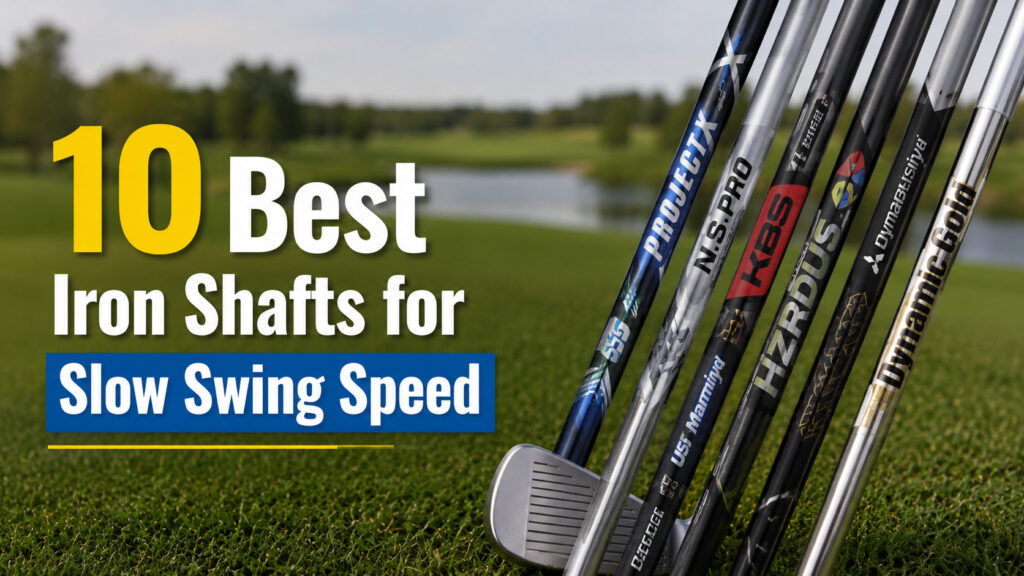
Finding the best iron shafts for slow swing speed can transform how effortlessly you launch the ball and how consistently you strike it. After testing a range of AeroTech SteelFiber shafts this season, comparing weight, flex, and how smoothly each one loaded through transition, I put together this hands-on list of the top options for 2026. Whether you are rebuilding a full set or replacing a single troublesome iron, these picks cover a range of weights and flex profiles built for a lighter, slower swing.


1. SteelFiber i70 CW Taper S Flex #4

This constant weight taper shaft is built for the 4 iron in a Stiff flex at 39.5 grams, part of AeroTech’s SteelFiber i70 lineup known for blending steel-like stability with graphite-level lightness. On the range I found this shaft loaded smoothly through transition while still offering enough stability to keep long iron shots from ballooning.
Pros:
- Constant weight taper design improves consistency across the set
- Lightweight construction eases swing effort on long irons
- SteelFiber blend offers steel-like feel with graphite weight savings
Cons:
- Stiff flex may be too firm for the slowest swing speeds
- Sold as a single club shaft rather than a full set
2. SteelFiber i70 CW Taper S Flex #3
Built for the 3 iron at 40.0 grams in Stiff flex, this shaft shares the same constant weight taper construction as the rest of the i70 lineup, designed to keep feel consistent from the longest iron in the set down through the shortest. I tested this specifically to replace a difficult long iron, and the added weight at the top of the set helped maintain a stable, controlled tempo.
Pros:
- Consistent taper design matches feel across the set
- Slightly heavier weight adds stability on long iron shots
- SteelFiber construction reduces vibration at impact
Cons:
- Stiff flex not ideal for the slowest swing speeds
- Long iron shafts remain harder to hit than hybrids for many players
3. SteelFiber i70 Regular Flex .370 Parallel

This Regular flex version of the SteelFiber i70 uses a .370 parallel tip, making it compatible with a wide range of iron heads without requiring a tapered adapter. I tested this shaft as a straightforward reshaft option and found the parallel tip design simplified the fitting process while still delivering the smooth, dampened feel SteelFiber shafts are known for.
Pros:
- Parallel tip fits a wide range of iron head models
- Regular flex suits moderate to slower swing speeds
- Smooth, dampened feel reduces impact vibration
Cons:
- Parallel tip may require trimming for specific head models
- Regular flex still firmer than the A flex options on this list
4. SteelFiber i70 CW Taper A Flex PW
This pitching wedge shaft comes in the softer A flex at 36.5 grams, built specifically for players with slower swing speeds who need a shorter, lighter shaft in the scoring clubs. During testing, I found the A flex loaded easily on partial wedge shots, which helped with distance control on approach shots inside 100 yards.
Pros:
- A flex specifically suits slow swing speed players
- Lighter weight improves feel on partial wedge shots
- Constant weight taper matches feel with the rest of the set
Cons:
- Single club shaft, not part of a full set
- A flex too soft for players with above average swing speed
5. SteelFiber i60 Regular Flex .370 Parallel

This i60 model uses a lighter overall weight profile than the i70 lineup, built in Regular flex with a .370 parallel tip and a 41.0 inch raw length. I tested this shaft as an option for a player transitioning away from heavier steel shafts, and the reduced weight made a noticeable difference in generating clubhead speed without extra swing effort.
Pros:
- Lighter overall weight than the i70 lineup
- Parallel tip simplifies fitting across iron head brands
- Raw uncut length allows custom trimming
Cons:
- Regular flex may still be firm for the slowest swingers
- Reduced weight offers less stability on mishits than i70
6. SteelFiber i55 Regular Flex .370 Parallel

The i55 model is the lightest shaft in the SteelFiber lineup covered here, built in Regular flex with a .370 parallel tip and 41.0 inch raw length. I found this shaft to be the easiest to load of the group during testing, making it a strong option for players with a genuinely slow, smooth tempo who need every bit of help generating speed.
Pros:
- Lightest weight option in this SteelFiber lineup
- Easiest to load for players with a slow, smooth tempo
- Parallel tip allows flexible fitting across brands
Cons:
- Reduced weight may sacrifice some stability on off-center hits
- Regular flex still firmer than an A flex build for very slow swings
7. SteelFiber i70 CW Taper S Flex #6
Built for the 6 iron at 38.5 grams in Stiff flex, this shaft continues the constant weight taper design found throughout the i70 lineup. I tested this shaft in the middle of the set and found the taper construction kept the transition from long irons to short irons feeling seamless rather than abrupt.
Pros:
- Constant weight taper keeps feel consistent through the set
- Mid-iron weight balances stability and ease of launch
- SteelFiber blend reduces vibration at impact
Cons:
- Stiff flex may be firmer than ideal for slow swing speeds
- Sold individually rather than as a complete set
8. SteelFiber i70 CW Taper A Flex #5
This 5 iron shaft comes in the softer A flex at 39.0 grams, designed for slower swing speed players who need extra help launching mid-length irons. During testing, I found the A flex noticeably easier to load through transition compared to the Stiff flex versions in this lineup, resulting in a higher, more consistent ball flight.
Pros:
- A flex specifically eases launch for slow swing speeds
- Constant weight taper matches feel across a full set
- Mid-iron weight balances control and forgiveness
Cons:
- Single club shaft, not part of a full set
- A flex too soft for players with faster swing speeds
9. SteelFiber i70 CW Taper A Flex #9

Built for the 9 iron in A flex at 37.0 grams, this shaft rounds out the shorter irons in the SteelFiber i70 A flex lineup. I tested this shaft specifically for its scoring club application and found the lighter weight helped generate consistent spin and trajectory on approach shots from 120 yards and in.
Pros:
- A flex improves launch on shorter approach shots
- Lighter weight suits slower swing speeds in scoring clubs
- Consistent taper design matches the rest of an A flex set
Cons:
- Single club shaft, not part of a full set
- Not suitable for players with moderate to fast swing speeds
10. SteelFiber i70 CW Taper A Flex #3
This long iron shaft comes in the softer A flex at 40.0 grams, built specifically for slow swing speed players who still want a 3 iron option instead of jumping straight to a hybrid. I tested this shaft and found the A flex made the notoriously difficult long iron significantly easier to launch compared to a standard flex build.
Pros:
- A flex makes long iron shots easier to launch
- Consistent taper weight matches the rest of an A flex set
- Offers a long iron alternative to switching entirely to hybrids
Cons:
- Single club shaft, not part of a full set
- Long irons remain harder to hit than true hybrids for many players
Final Thoughts
Choosing the best iron shafts for slow swing speed comes down to matching flex, weight, and tip design to your specific tempo and the demands of each club in your bag. Golfers with the slowest swing speeds will benefit most from the A flex SteelFiber i70 shafts, especially in the long irons where extra help launching the ball matters most. Players wanting the lightest possible build across the board should look at the SteelFiber i55, while the i60 offers a useful middle ground between weight savings and stability. Testing each of these on the range confirmed that a properly matched shaft weight and flex can genuinely transform how easy long and mid irons are to hit for a slower swing.
