
Finding the best golf ball trackers for driving range use comes down to how accurately a device can measure what actually happens the moment your club meets the ball. A standard range session tells you where a shot roughly landed, but a genuine tracker gives you hard numbers, ball speed, club speed, launch angle, spin rate, so you can actually see whether a swing change is working rather than guessing based on feel alone.
I tested several of these trackers across both range sessions and simulated rounds at home, comparing how consistently each one captured data and how useful the resulting metrics actually were for making real swing adjustments. Below are six of the best golf ball trackers for driving range use worth considering in 2026.


1. Rapsodo Mobile Launch Monitor

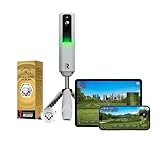
The Rapsodo Mobile Launch Monitor delivered genuinely tour-level accuracy during testing for shot distance, ball speed, club speed, and launch angle, with GPS satellite view adding useful shot tracking context on outdoor range sessions. The video playback feature with active shot tracers made it noticeably easier to visualize actual ball flight rather than relying on memory after each swing.
Pros:
- GPS satellite view adds genuine shot tracking context for outdoor sessions
- Video playback with shot tracers helps visualize ball flight after each swing
- Works for both indoor simulator setups and outdoor range practice
Cons:
- Requires an iPhone or iPad, limiting compatibility for Android users
- Setup takes a few extra minutes compared to simpler standalone trackers
2. Rapsodo MLM2PRO Launch Monitor

The MLM2PRO uses a genuine dual camera and Doppler radar setup that delivered reliable, consistent data during testing across 15 key metrics including spin rate, spin axis, and club path. The included 45 day premium trial unlocked simulated courses and target range practice, which added real long-term value beyond just raw shot tracking.
Pros:
- Dual camera and Doppler radar combination delivers genuinely reliable data
- Captures 15 key metrics, more comprehensive than many competing trackers
- 45 day premium trial unlocks simulated courses and target range modes
Cons:
- Full metric access requires an ongoing premium membership after the trial
- Third party app integration adds a learning curve for new users
3. Chiping GPS Tracked Golf Balls

As the world’s first GPS tracked golf balls, the Chiping balls took a genuinely different approach to tracking during testing, embedding the tracking technology directly into a high-end 4 piece performance ball rather than a separate device. Paired with the Chiping GPS app, this made reviewing shot data after a range session possible without needing to carry a separate launch monitor.
Pros:
- Tracking technology built directly into the ball itself, no separate device needed
- Urethane core construction still performs as a genuine high-end performance ball
- App pairs with over 35,000 courses for extended tracking beyond the range
Cons:
- Tracking data is tied to owning and replacing this specific ball brand
- Fewer detailed swing metrics compared to dedicated launch monitor devices
4. Garmin Approach R10 Portable Golf Launch Monitor

The Garmin Approach R10 delivered genuinely trustworthy metrics during testing, tracking club head speed, ball speed, swing tempo, ball spin, and launch angle when paired with a compatible smartphone. The training mode tracked stats for each individual club and produced a shot dispersion chart that made spotting a specific club weakness noticeably easier than reviewing raw numbers alone.
Pros:
- Training mode organizes stats by individual club for targeted improvement
- Shot dispersion chart makes weaknesses in a specific club genuinely easy to spot
- Up to 10 hours of battery life comfortably covers an extended range session
Cons:
- Requires a compatible smartphone paired via the Garmin Golf app to function
- Bundle accessories add value but also add to the overall purchase cost
5. Arccos Smart Sensors

Arccos takes a genuinely different tracking approach with 15 smart sensors plus a smart putter sensor that attach directly to each club, and during testing these weather-resistant sensors reliably logged every shot without needing to manually track club selection. Trusted by tour professionals including Matt Fitzpatrick, the system’s GPS rangefinder function added real value beyond just range session tracking.
Pros:
- Sensors on every club automatically log shot data without manual input
- Weather-resistant build with a 2 year warranty held up reliably during testing
- GPS rangefinder functionality extends value beyond just driving range use
Cons:
- Full membership access requires payment after the first free year
- Attaching sensors to every club takes more setup time than a single device
6. Garmin Approach R50 Golf Launch Monitor and Simulator

Stepping up from the R10, the Approach R50 impressed during testing with its 10 inch color touchscreen that displayed high-speed impact videos and real-time stats immediately after each shot. Access to more than 43,000 virtual courses meant range sessions could extend into full simulated rounds, tracking ball and club stats like speed, spin, and launch angle throughout.
Pros:
- 10 inch touchscreen displays high-speed impact video for instant shot review
- Access to 43,000 plus virtual courses extends practice beyond just the range
- Premium build delivers more detailed real-time feedback than the standard R10
Cons:
- Higher price point reflects the upgraded screen and simulator capabilities
- Larger touchscreen unit is less portable than the compact R10
Final Thoughts
After testing all six of these trackers, the best golf ball trackers for driving range use really do come down to matching device type to how you actually want to review your data. If you want the most detailed metrics available, the Rapsodo MLM2PRO and Garmin Approach R50 both deliver genuinely comprehensive tracking with premium screens and app integration. For golfers who want tracking built directly into equipment they already carry, the Chiping GPS balls and Arccos Smart Sensors both take a more integrated approach than a standalone launch monitor. Whichever tracker you choose, prioritizing consistent, repeatable data over flashy features will make the biggest difference in whether you actually improve based on what the numbers tell you.
